
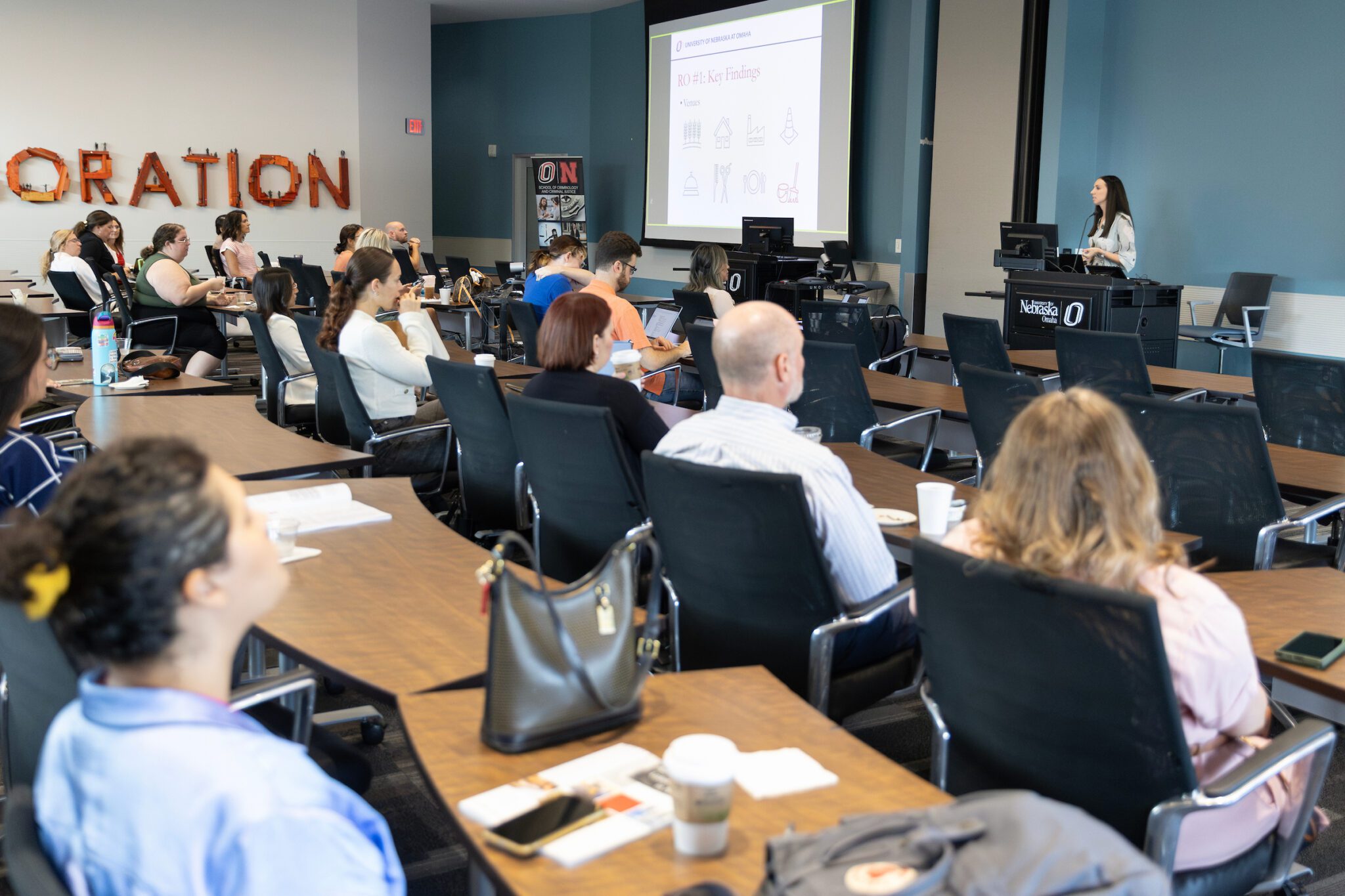
UNO researchers are shining a light on labor trafficking in Nebraska, revealing how victims are exploited and how communities can fight back.
by BELLA LOCKWOOD-WATSON
UNO Communications Specialist
University of Nebraska at Omaha (UNO) researchers have completed the state’s first comprehensive study of labor trafficking to better understand how and why this hidden crime occurs, and how to stop it.
UNO’s two-year study is the first to systematically assess labor trafficking across Nebraska, drawing on a statewide survey of hundreds of professionals and interviews with stakeholders and a survivor.
The research confirms that labor trafficking is happening in multiple Nebraska industries – from farms and factories to restaurants, domestic work, and even cleaning services – despite few perpetrators ever facing charges.
Labor trafficking is a serious, under-recognized problem that harms victims and communities. It’s considered a public health and safety concern that demands a coordinated response.
This new data will help Nebraska agencies and policymakers have a better understanding of these crimes. Understanding how labor trafficking happens locally can improve training, identification, and support services – ultimately preventing exploitation before it starts.
A statewide survey received 582 responses from Nebraska professionals, of which 170 had firsthand experience with labor trafficking cases or survivors.
Nebraska law enforcement officials noted major challenges in investigating these cases: inconsistent protocols, outdated or unclear procedures, language and cultural barriers, and the difficulty of gaining trust from traumatized victims all hinder effective action.
Service providers – those helping survivors with shelter, legal aid, counseling, etc. – reported limited resources and patchy coordination, especially in rural areas of Nebraska. Common survivor needs include safe housing, legal services, mental health support, translation assistance, job help, and basic necessities like food and medicine.
“Labor trafficking is a complex crime that requires a coordinated approach for investigation and response efforts,” Teresa C. Kulig, Ph.D., UNO expert and criminology professor and the study’s principal investigator said. “Our goal with this study was to pull back the curtain on these crimes. We now have evidence that it’s happening here in Nebraska, and this knowledge is power. It will help communities recognize the red flags and rally resources to protect vulnerable workers.”
The report lays out actionable next steps for Nebraska. Recommendations include launching public awareness campaigns about labor trafficking, integrating screening tools for frontline workers, and ramping up cross-agency training so that police, prosecutors, and service providers can better coordinate their efforts.
One bold idea from the researchers is the creation of a Center on Labor Trafficking (CLT) in Nebraska. Such a center would serve as a statewide hub to implement these recommendations – uniting law enforcement, policymakers, and community organizations to share information, train professionals, and ensure survivors across Nebraska get the help they need.
“For too long, the nature and scope of labor trafficking have been difficult to identify,” Sadaf Hashimi, Ph.D., UNO expert criminology professor and co-principal investigator, said. “Victims are often unaware of their circumstances or reluctant to come forward, which creates challenges for detection. By documenting these experiences, law enforcement and service providers can be better equipped to recognize and support survivors.”