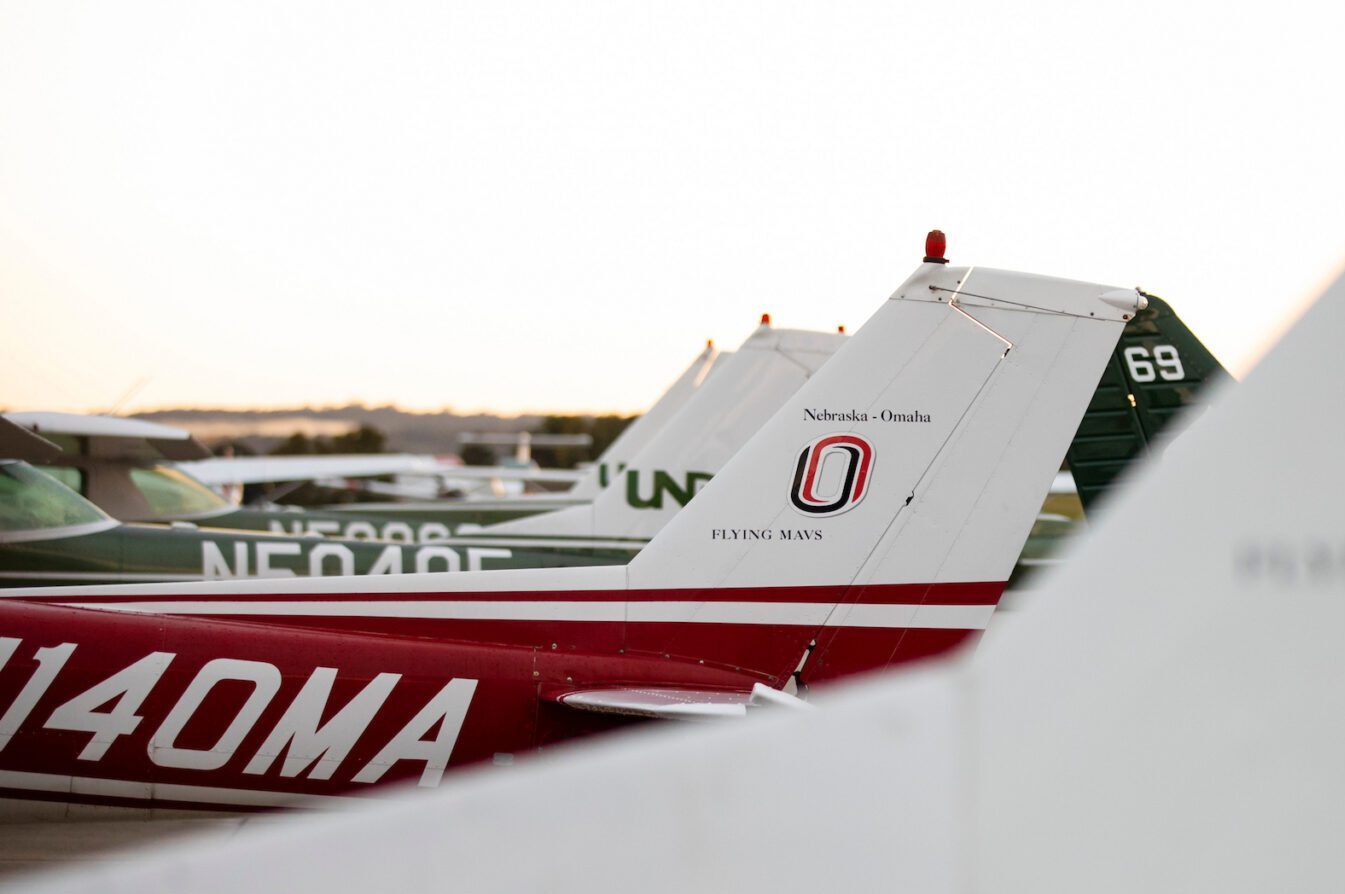
The UNO Aviation Institute uses immersive VR and cognitive tools to help pilots hone their skills for the cockpit.
by SUSAN HOUSTON KLAUS
Mornings this fall, you can find members of the University of Nebraska at Omaha Flying Mavericks Flight Team gathered in a classroom hallway. Wearing virtual reality headsets and holding paddles, they’re each immersed in their own world, diligently bobbing and weaving, dodging obstacles only they can see.
The team is the first to participate in a pilot neuro training program launched by the UNO Aviation Institute that uses immersive VR and cognitive tools to help pilots hone their skills for the cockpit.
The program is supported by a gift from Omaha philanthropists Barbara and Wally Weitz, as part of Only in Nebraska: A Campaign for Our University’s Future. They chair the UNO campaign committee.
The Weitzes designated nearly three quarters of a $19 million gift commitment to create the Weitz Innovation and Excellence Fund to benefit UNO. This funding is being awarded to strategic campus priorities that may benefit from new investment, as determined by a campus committee.
The fund’s purpose is to elevate particularly good programs to nationally recognized ones while addressing critical areas of need in Omaha and the state of Nebraska.
UNO Aviation Institute Director Scott Vlasek first learned about the NeuroTrainer application, created by a San Francisco-based company, about six years ago when his daughter’s volleyball club trained with it. Using it in the program had been in the back of his mind ever since.
“NeuroTrainer allows us to be on the leading edge of technology in our aviation flight training. With it, we’re putting ourselves above a lot of the other universities and programs out there.” – Hunter Pehrson, the UNO Aviation Institute’s recruitment and retention specialist
Beneficial for both athletes and pilots, NeuroTrainer is an innovative way for users to improve their decision-making and response time.
The pilot group has been using two programs designed to test their reaction skills and build their cognitive response. The exercises are meant to “wake up their brains, especially in the mornings or before a critical operation like going out and flying, to make sure they’re at a peak performance,” Vlasek said.
“We’re having our students do [the exercises] a minimum of three times a week,” he said. “We’re asking them to try to do five times a week, and then also there will be some days that we’ll probably do it twice that day.”
The application takes small activities and turns them into a game format, said Pehrson.
“It’s kind of fun for them because there are other leaderboards that they can view. They’re all competitive, so they want to be better than everybody else. It’s cool to see them talk about it,” he said.
Tyler Thieman, a junior at UNO and a member of the Flying Mavs, said he already sees his use of NeuroTrainer having a positive impact on his performance.
“I’ve noticed a lot more attention to detail during actual practice, and I’m able to keep my mind focused,” he said. “It’s easy to get off task, especially when you’re doing some of the same things over and over. It gets a little monotonous, but I’ve noticed that focus and attentiveness have kind of stayed on topic a good bit more since we started doing this.”
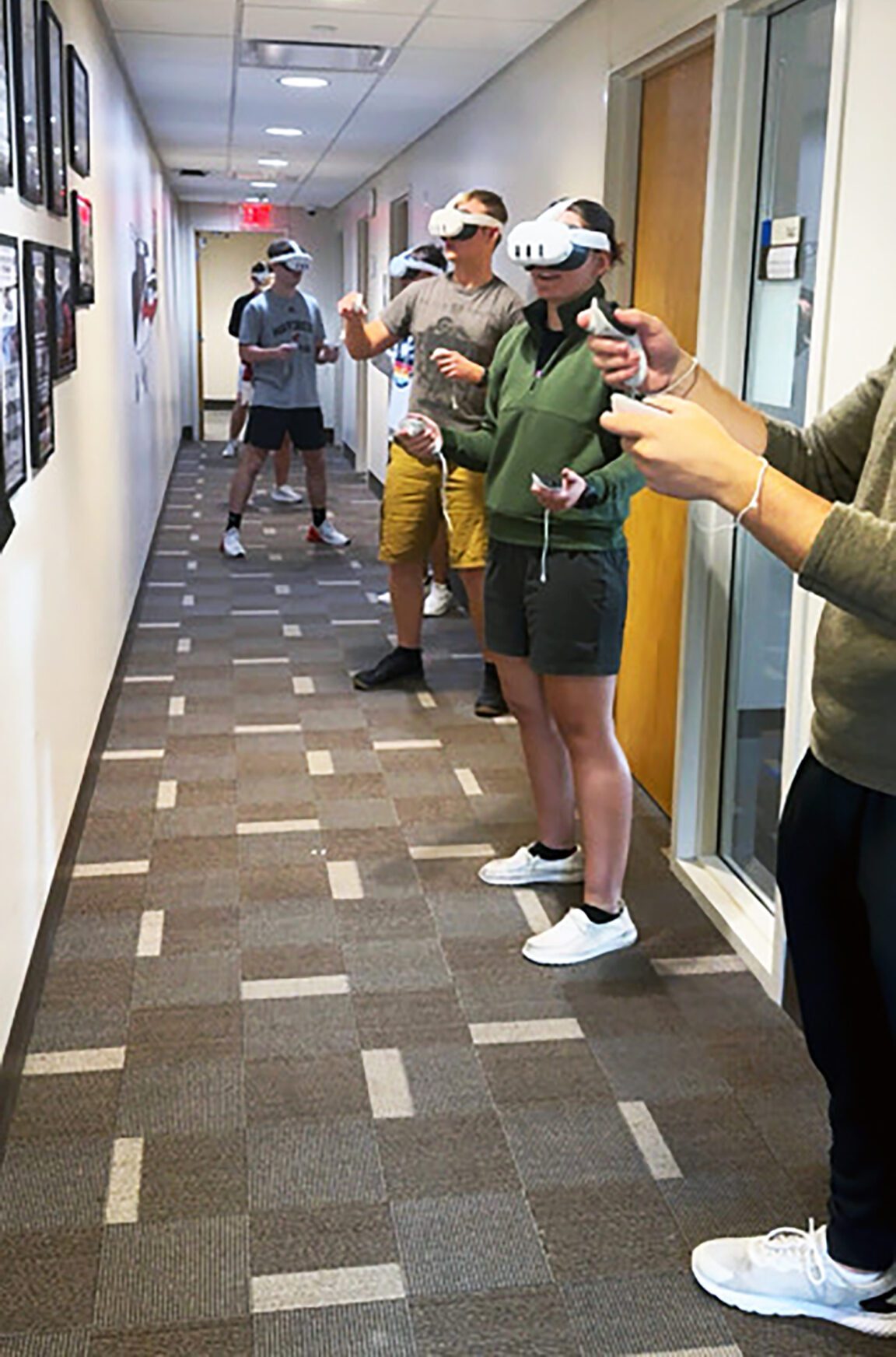
Thieman said the exercises he performs wearing the VR headset translate directly to actual flying in a different way than traditional classroom instruction.
“It’s not just, ‘All right, sit down, take this test.’ It incorporates everything, and I can understand how it’s increasing my performance as I’m doing it,” he said. “It’s very obvious what these things help me with and how they improve my performance in and out of the cockpit.”
The UNO Aviation Institute is the first collegiate aviation program in the country to use NeuroTrainer. It’s a distinction that benefits current students and those considering UNO for their education, said Pehrson.
“NeuroTrainer allows us to be on the leading edge of technology in our aviation flight training. With it, we’re putting ourselves above a lot of the other universities and programs out there. We’ve added this piece that allows our students to have something that many other students don’t have access to. I think it will help us have a recruiting edge compared to a lot of other universities,” he said.
Only in Nebraska: A Campaign for Our University’s Future is focused on supporting innovation in education. Visit OnlyinNebraska.org to learn more.