NASA Nebraska Space Grant Sparks Discovery Across the State
by SUSAN HOUSTON KLAUS
The NASA Nebraska Space Grant (NSG) program may be located many miles from where shuttles and rockets blast off and where stars twinkle in the sky. But the organization, in Nebraska since 1991, is making an impact from its home at the University of Nebraska at Omaha.
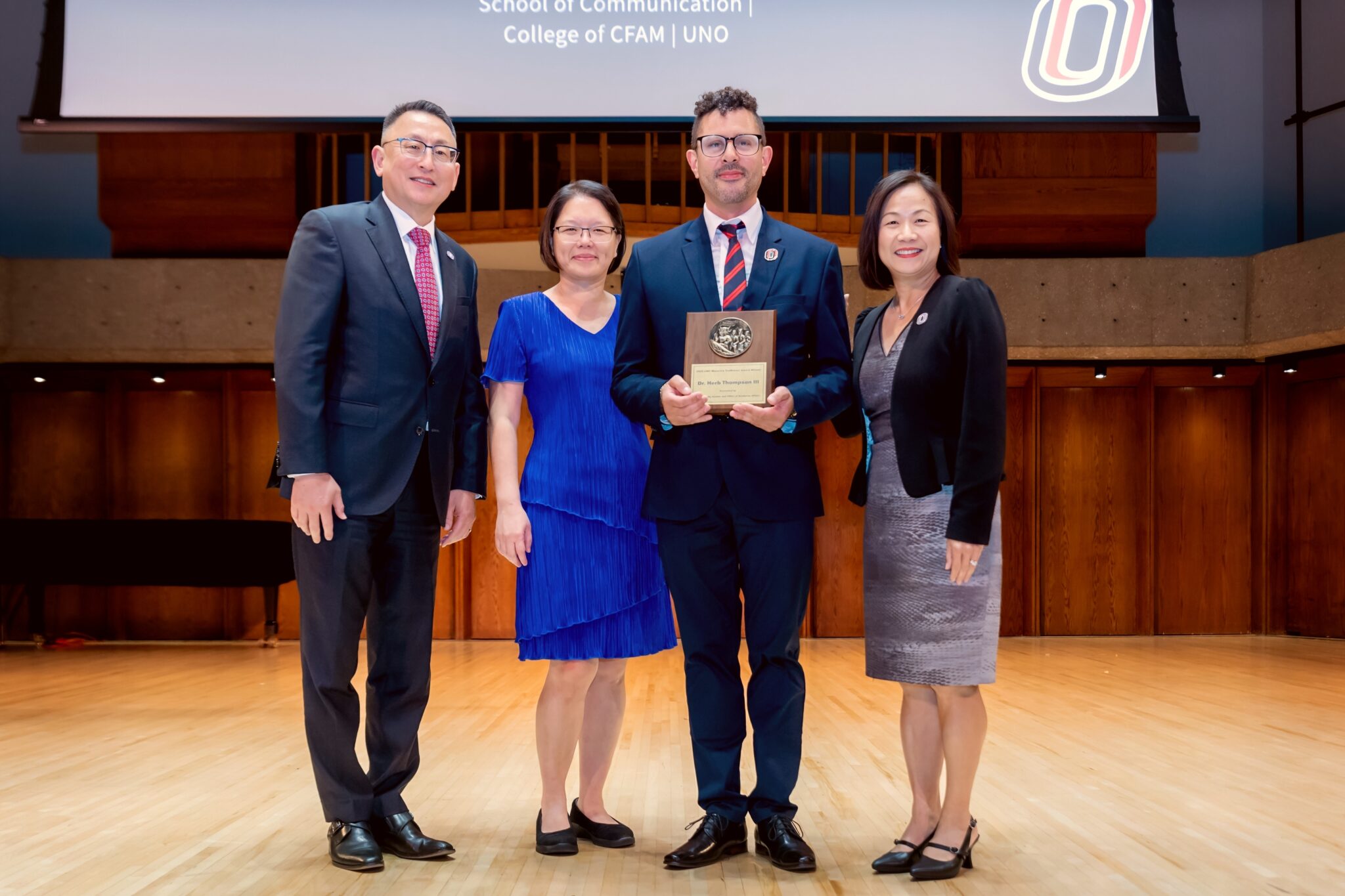
NSG was recognized this year by NASA as a critical partner in the program.
One of 52 consortiums in the country, NSG awards funds to faculty interested in doing research related to NASA’s missions and to students interested in joining the aerospace and space-related industries. It also supports and promotes aerospace research and education across the state.
For NSG Co-Director Michaela Lucas, teaming with teachers and students is an important part of the program that takes her back to being young.
“My first grade teacher inspired me in this realm when we covered it back when the first space shuttle was launching,” she said.
“By training teachers, you’re exponentially going to impact more students over time, because you plant that spark with the teacher and they’re going to share that back with students, class after class, year after year.”
NSG takes a group of teachers to Kennedy Space Center in Florida every summer. There, they do hands-on activities, talk with scientists and engineers, and meet UNO graduates working there.
Students also partner with NSG. In 2024, NSG’s Big Red Satellite program launched the first CubeSat— a satellite experiment included as an auxiliary payload on a rocket headed to the International Space Station— to orbit the Earth.
A multidisciplinary team of middle and high school students from Omaha, Lincoln and Aurora, Nebraska, worked with students from the University of Nebraska–Lincoln.
The program’s influence on future generations is especially crucial in a time when people in STEM careers are in short supply.
Lucas said it’s important to get students curious about STEM subjects early.
“We need to plant those seeds before they get to college or have self-selected out of math and science and engineering by the time they’re in middle school. You have to reach them sooner than that.”
Liliana Delgado, a third-year doctoral candidate in biomechanics at UNO, said the NASA Nebraska Space Grant has allowed her to “do some fantastic work” in a unique area.
Delgado’s research involves testing 3D printing in space. The work, called mechanical characterization testing, involves compression and tensile testing to understand the properties needed to print in space and simulate the space environment.
Her team has sent up spooled filament to test in the 3D printing laboratory on the International Space Station and compare how it performs with the same materials on Earth.
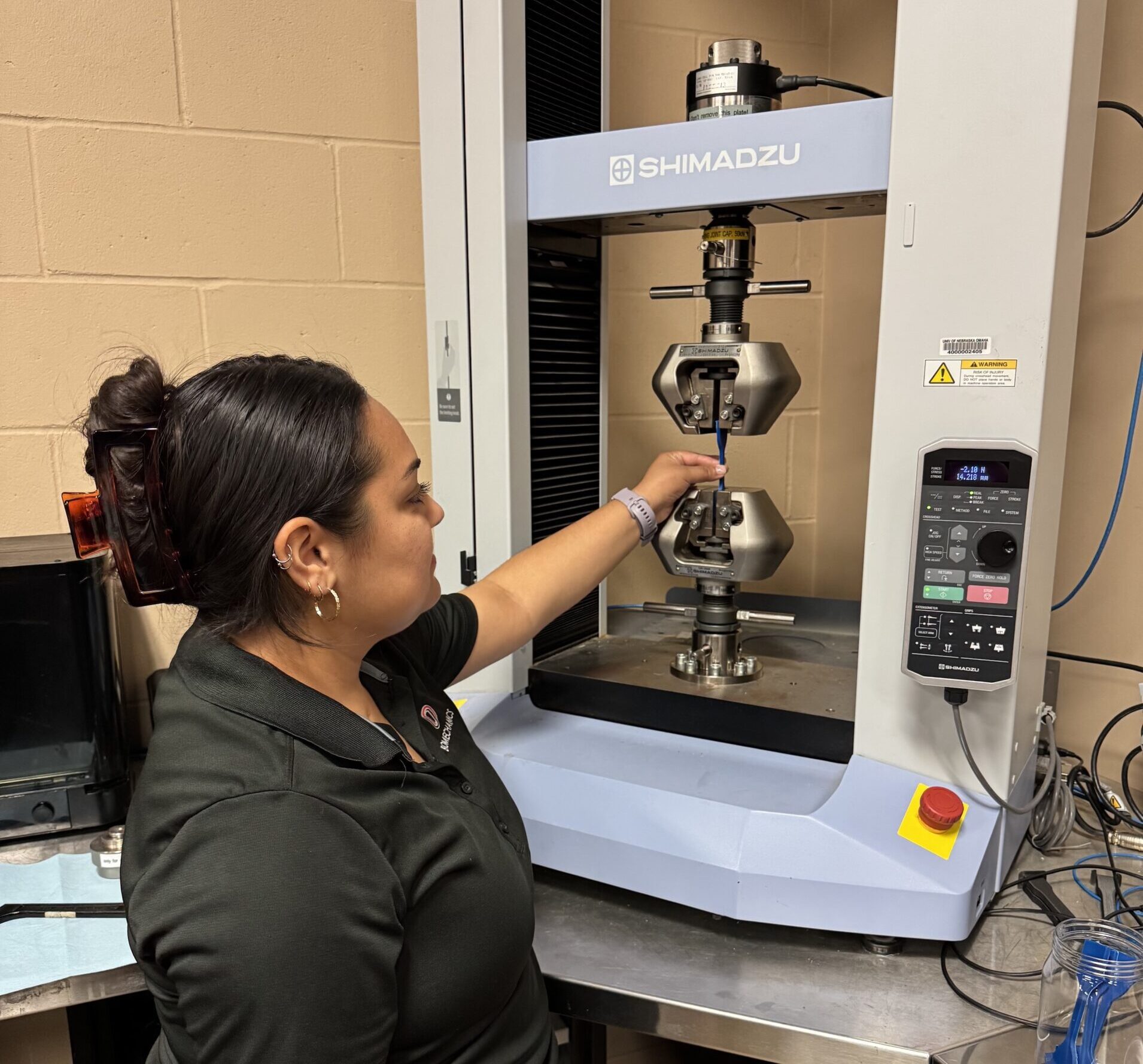
“The intention is that once we validate that it does perform just as mechanically well in space and in microgravity that tools such as scalpel handles could be printed,” Delgado said.
“All that needs to be sent up to space is the actual scalpel blade. Then we can just print a sterilized 3D printed scalpel handle. So that’s less material packaging that needs to be carried on board.”
The support Delgado receives from NSG is invaluable in helping push her research forward.
“You might not immediately think of biomechanics and space — what does that have to do with each other?” she said. “[NSG] really sees the value in investing in researchers’ projects because they understand the time commitment that’s involved with conducting these studies.”
For Michael Sibbernsen, co-founder and director of higher education of the Branched Oak Observatory and an NSG partner, tracking a once-in-a-lifetime event is part of a mission supported by the NASA Nebraska Space Grant.
On clear Nebraska nights, stargazers at the observatory, near Lincoln, are keeping an eye on a particular pair of stars inside one constellation.
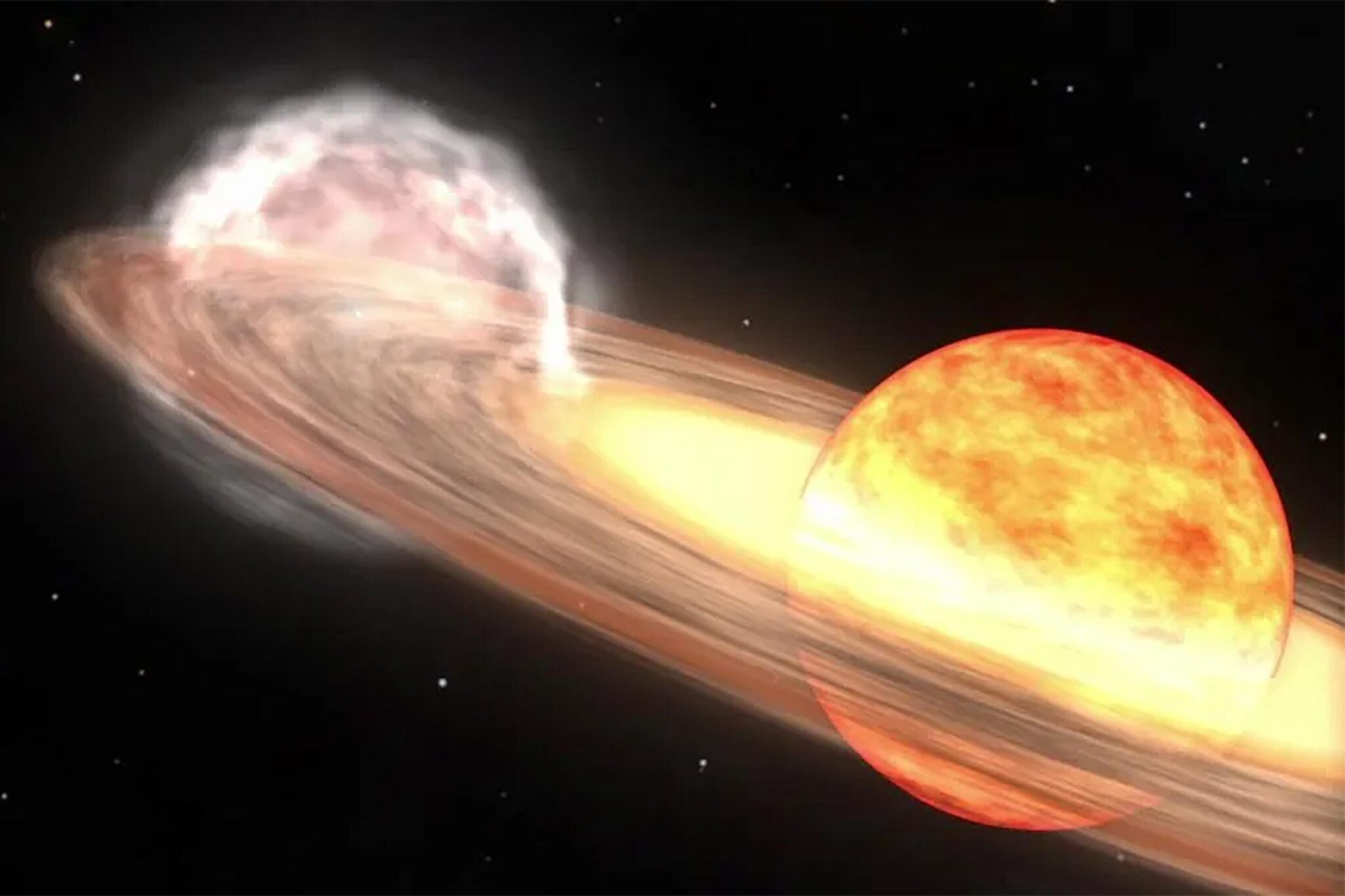
Both a binary star and a recurrent nova, its official name is T Coronae Borealis, or “T CrB.” Familiarly, it’s known as the Blaze Star.
It’s been making astronomy news lately because it’s expected to erupt soon, putting on a glow that may rival the brightness of the North Star. The event is a once-in-every-80-years occurrence — the last one happened in 1946.
Star spotters will need to look quickly: Once the Blaze Star erupts, it may only be visible to the unaided eye within just a week.
For Sibbernsen, the event represents a great illustration of beginnings and endings in the sky.
“It’s just one more way to learn more about stellar evolution, about the life, the birth, the death of stars. This is just one more piece of data to be able to add to that greater pantheon of knowledge that we have about stars in general.”
Since the observatory opened 11 years ago, its campus has grown by leaps and bounds and now has over a half dozen different buildings.
“We’ve created quite a facility of different telescopes, and we try to host as many public events as we can,” said Sibbernsen.
Through the NSG and other grants, the facility has been able to fund its radio telescope and earth moon earth radio system. Another big addition to the observatory is a hydrogen alpha solar telescope. Funded by an NSG mini grant, it allows visitors to safely look at the sun.
Sibbernsen said the NSG has also provided funding for the observatory to create a summer internship program and to be open weekends.
“That allows us to offer more observing opportunities to the general public — something we wouldn’t have been able to do without the help of the NASA Nebraska Space Grant,” he said.
“That has been huge for us and huge for the community.”